Showing posts with label galápagos islands. Show all posts

9.23.2010

ode to the sea lions of san cristóbal


They waddle down the streets, sleep on park benches and howl and bark all night and day. I guess I'd do the same if someone invaded my territory.

9.22.2010

overstimulated


Blogged about this amazing little fish market in Puerto Ayora, Galápagos Islands for the Post-Dispatch. Check it out. One day I'll go back and make an even better picture. Fish, sea lions, birds...don't you go anywhere!

9.18.2010

the colors of ecuador


San Cristóbal, Galápagos Islands


Mindo

On walls and in the skies, the colors of this country catch my eyes.

9.24.2009

streets of sand


Puerto Villamil, Isabela, Galápagos Islands

I ♥ streets así. It's as if your feet never leave the beach.

isabela wildlife


Sea lion


Galápagos penguins


Sally Lightfoot crab

We went for a little wildlife cruise one day off the island of Isabela in the Galápagos. It's so fascinating to see penguins on the equator - and a little surreal. One of my favorite wildlife stories was that of the Sally Lightfoot crab. The crab walks beautifully, on its toes. The crab's name is said to have been inspired by a nightclub dancer in Guayaquil that attracted sailors with her equally eloquent moves.

9.14.2009

invasive species


Puerto Ayora


Baltra


Guayaquil

No, I'm not talking about our group...though we were probably more invasive than we needed to be at times. I'm talking about the the fragile (and one-of-a-kind) ecosystem of the Galápagos. (Read more here.) Interesting measures are being taken to prevent the presence of more invasive species on the islands.

First, the airplane was fumigated while on the ground in Guayaquil. You can see this happening in the photograph. (The flight attendant in front has a small aerosol can he is spraying into the overhead compartments.) I couldn't take the fumigation very seriously 1) because we were on board the airplane when it happened 2) rumor has it a fly survived the fumigation. Maybe it's a good idea, but I question its effectiveness.

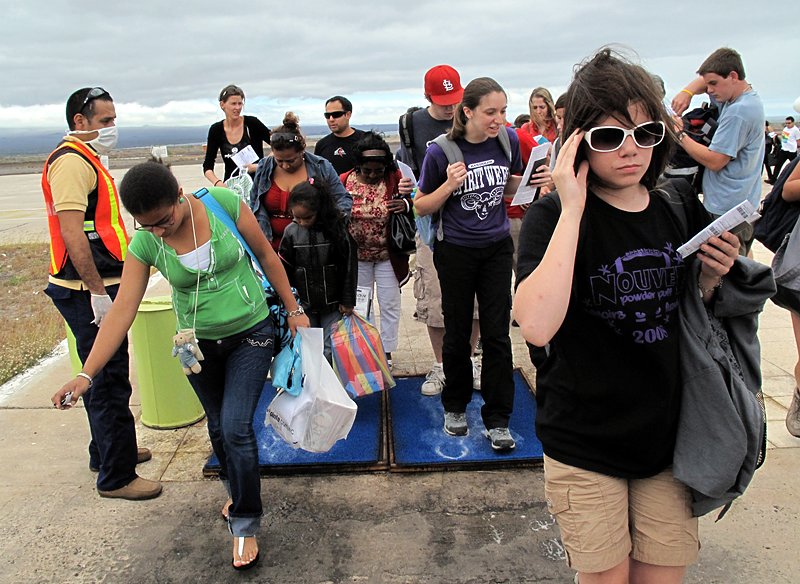
Second, after deboarding the plane in Baltra everyone must step on a spongy, blue mat. This helps rid your shoes of dirt, debris and, most importantly, seeds. You also step on these mats every time you leave and/or enter a new island. Remember, the islands don't all share the same ecosystem.

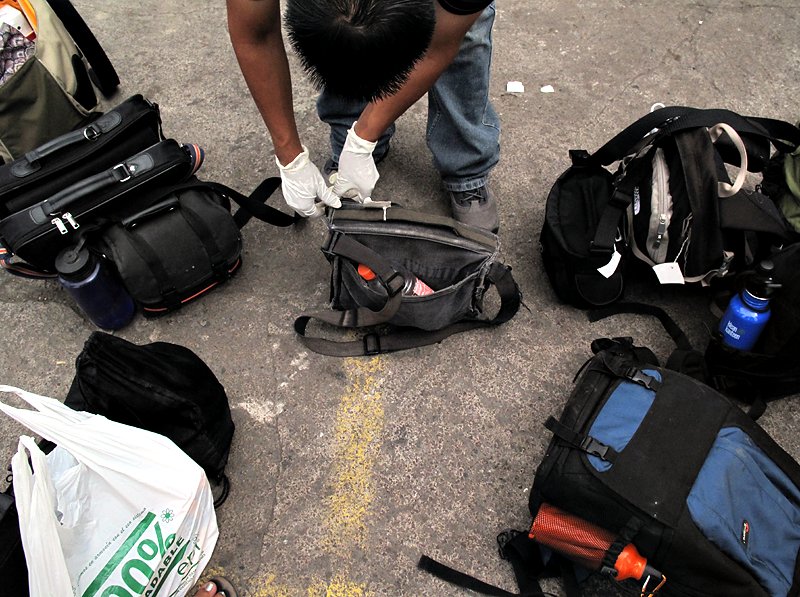
Third, every time you go from one island to the next, your bags are inspected. Most of the inspections were about as serious as the fumigation on the airplane. However, a new system (law?) was put into effect in Puerto Ayora between our stays there, and the last time we left the island, the inspection was incredibly thorough. We joked that it was the most thorough inspection ever carried out on the islands. Though it's somewhat of an inconvenience to wait for the inspection (especially in a group of 28!), I don't think you can put a price on the native and endangered species of the islands. Inspect away.

the giant tortoise


Santa Cruz Highlands


Santa Cruz Highlands

One of only two places in the world where you can see the giant tortoise in the wild.

lava tubes


Can you believe molten lava once flowed through these cavernous tubes? Pretty amazing...You can find these all over the highlands of Santa Cruz in the Galápagos.

9.13.2009

take a dip


león dormido


These rocks rise about 500 feet into the air off the coast of San Cristóbal. We snorkeled through the space between them and saw Galápagos sharks resting on the ocean floor. I started to feel small stings on my face and arms from some type of micro jellyfish. One got me right above the lip pretty good. It was just enough to keep me alert and looking for more Galápagos sealife!

I still have a handful of Ecuador photographs to post. Hang with me!

i want to be...


San Cristóbal, Galápagos Islands

...on a boat!

8.29.2009

wait, there are people in galápagos?


A mural in Puerto Ayora, Santa Cruz depicting the history of the islands


Puerto Villamil, Isabela


Puerto Villamil, Isabela


Puerto Baquerizo Moreno, San Cristóbal


Malecón in Puerto Ayora, Santa Cruz

When I tell stories about my trip, most people are surprised to find out that people live on the Galápagos Islands. I share these photographs to show the three towns we stayed in; all with populations, hotels, restaurants and modern amenities.

Puerto Ayora on the island of Santa Cruz is the largest of the three towns. It's home to the Charles Darwin Research Station, where Lonesome George lives. Puerto Baquerizo Moreno on the island of San Cristóbal is the island's second largest city. It's the capital city and home to the university and a fantastic interpretation center. Puerto Villamil on the island of Isabela is a smaller, sleepier town on the archipelgo's largest island. The streets are sand and the people are beautiful. If you go to Bar de Beto (arguably the island's best bar) you might even get some chewed gum in your popcorn. Yum!

The islands' population is estimated to be between 30,000 and 40,000. Last year, more than 100,000 tourists visited the Galápagos. This is a major concern to the islands that are 97 percent National Park. Restrictions have been placed on both tourism and immigration. UNESCO also added the Galápagos to the World Heritage Site “in danger” list under the recommendation of the World Conservation Union. If you want to read more, check this out.

galapagueno flags


Puerto Villamil, Isabela


Puerto Villamil, Isabela


Ferry from Baltra to Santa Cruz

Flags need the wind to fly. Six hundred miles off the coast of South America, the Galápagos has plenty of this element. The flags fly proud, tattered and torn, from docks, boats and rooftops. Specks of color amidst clouds of grey.

8.24.2009

amable


On the island of Isabela there is a man called Amable. His name means "kind" in English. He owns a small bar and sings songs about his love, home and land. There are one and the same - Galápagos.

lonesome george


He's the last Pinta Tortoise in the world. He's a symbol for conservation. He's everyone's favorite tortoise. If you roll your eyes and think, "A tortoise? C'mon. Who cares?" I challenge you to read the book Lonesome George. It's a fantastic read on Galápagos, and it makes the reader keenly aware of human impact on nature. Nature can be strong. Nature can be fragile.

8.11.2009

volcán chico


Lava fields


500 to 800-year-old cactus


Volcán Chico

In the shadows of Sierra Negra lies another active volcanic zone, known as Volcán Chico. Sulphur, iron, Pahoehoe lava and A'a lava cover the landscape. You can actually see small chunks of pure yellow sulphur mixed in with other volcanic rock. Lone cacti decorate the landscape. This one is between 500 and 800 years old.

sierra negra


Sierra Negra's 10-kilometer wide caldera


We hiked 10 miles to, from and around her caldera. She last erupted in 2005. You can find her on Isabela in the Galápagos.